
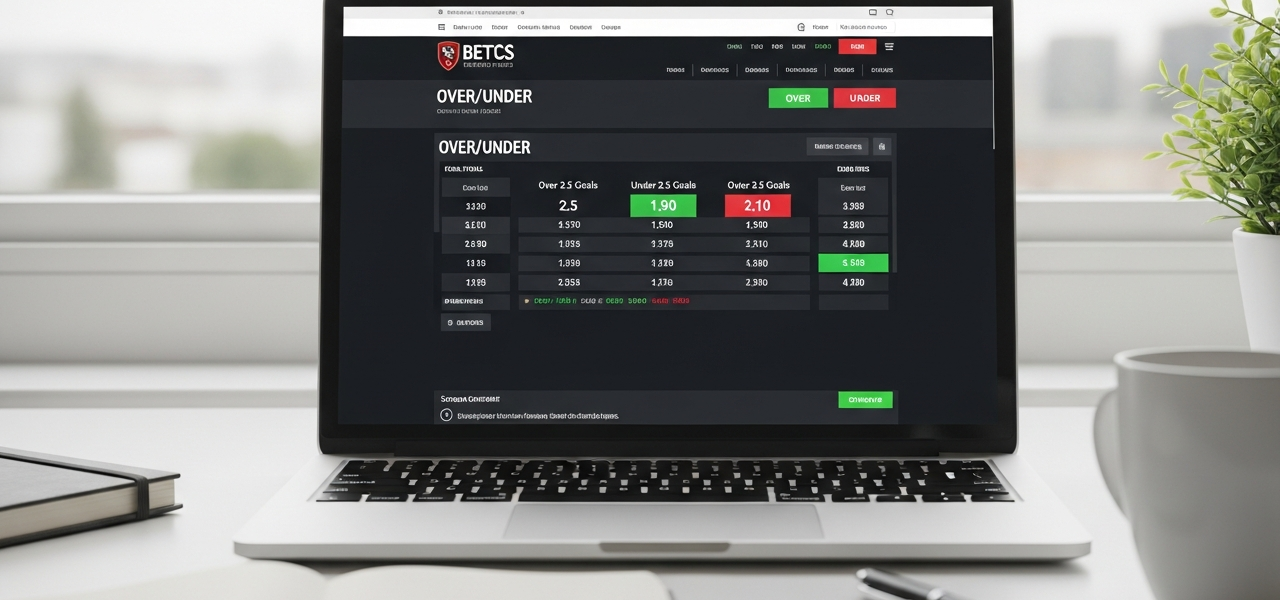
Over/under betting—often called the totals market—shifts the focus away from predicting match winners to forecasting the combined number of goals scored by both teams. Instead of asking “Who will win?” bettors ask “How many goals will we see?” This market has grown popular among Indian football fans, particularly those who follow the Indian Super League (ISL) and I-League, because it offers a straightforward way to engage with the sport’s tactical nuances. Whether you’re assessing attacking tempo, defensive solidity, or situational factors like weather and travel, understanding how totals markets work can sharpen your betting decisions and add depth to your match-day analysis.
This guide walks you through the mechanics of over/under lines, explains how bookmakers set goal thresholds, and provides India-specific insights on scoring patterns, league characteristics, and practical betting workflows. You’ll learn to read odds movement, identify key match factors, and build a repeatable process that accounts for the unique conditions of Indian football.
What Over/Under Betting Means in Indian Football
At its core, over/under betting asks you to predict whether the total number of goals scored in a match will be above or below a specific line posted by the bookmaker. The most common line in football is 2.5 goals. If you bet “over 2.5” and the match ends with three or more goals, you win; two or fewer, you lose. If you bet “under 2.5,” you need two goals or fewer to collect.
What makes this market appealing is its independence from the match result. A team can lose 3–1, but your over 2.5 bet still wins because four goals were scored. Conversely, a 1–0 victory for your favourite side might disappoint if you backed the over. This separation from the final outcome allows you to focus purely on the flow, pace, and goal-scoring potential of the contest.
In Indian football, where many matches feature conservative tactics, tight defenses, and relatively low goal averages, totals markets demand careful attention to league context, squad depth, and matchday variables. The ISL and I-League each have distinct characteristics—understanding these differences is essential for setting realistic expectations on any given line.
Over vs Under: the basic decision
Betting “over” means you expect an attacking, open game with multiple goals. For example, if Mumbai City FC faces Bengaluru FC and the line is set at 2.5, an over bet wins if the scoreline is 2–1, 3–0, or 2–2. Backing “under” signals you anticipate a low-scoring affair—perhaps a 1–0, 0–0, or 1–1 result.
ISL fixtures often provide clear examples: when an in-form attacking side meets a team with a leaky defence, the over becomes attractive. Conversely, when two defensively organised mid-table teams meet in humid conditions on a heavy pitch, the under may offer better value. The key is matching your read of the game’s likely tempo and quality with the bookmaker’s posted line.
Why Indian football bettors use totals
Indian football leagues tend to be lower-scoring compared to Europe’s top divisions. Tactical caution, uneven squad quality, challenging weather, and long travel distances all contribute to tighter scorelines. This environment makes totals markets particularly interesting: small shifts in team news, pitch conditions, or tactical setup can swing a line from under to over.
Totals betting also appeals because it rewards analysis of style and system rather than pure team strength. A weaker side can still contribute to a high-scoring game if they play open football and concede space. For bettors who study expected goals (xG), shot maps, and defensive vulnerabilities, the totals market offers a clear path to finding value that might be hidden in traditional win-draw-loss markets.
How Bookmakers Set the Goal Line
Bookmakers construct totals lines by analysing a range of statistical inputs and contextual factors. They begin with each team’s offensive output—goals per game, shots on target, xG—and defensive record, then layer in situational variables like injuries, venue, and recent form. The aim is to set a line that balances action on both sides, minimising the bookmaker’s risk.
In Indian football, additional factors come into play. Squad depth is often shallow, so the absence of a key striker or defender can dramatically alter goal expectation. Travel fatigue is real: I-League clubs sometimes cover vast distances with limited recovery time. Venue matters too—playing at altitude in Shillong or in the humidity of Guwahati can sap energy and reduce scoring. Bookmakers account for these nuances, and sharp bettors should too.
| Factor | What it changes | Typical Indian football impact |
|---|---|---|
| Team offensive strength | Raises the line if both sides score freely | ISL top teams push lines higher; I-League varies widely |
| Defensive record | Lowers the line for tight defensive units | Clubs with organised backlines reduce goal expectation |
| Key injuries or suspensions | Can shift line by 0.5 goals if a star is out | Shallow squads mean replacements drop quality significantly |
| Venue and travel | Home advantage or fatigue adjusts expectations | Long I-League trips and altitude venues suppress scoring |
| Weather and pitch quality | Heavy rain or poor surface slows play | Monsoon and uneven pitches common in regional venues |
Key inputs behind a 2.5 or 3.0 line
The 2.5-goal line dominates football betting because it sits near the sport’s global average and eliminates the possibility of a push (a refunded bet when the total lands exactly on the line). In the ISL, where the average goals per match hovers around 2.3 to 2.7 depending on the season, 2.5 is a natural anchor. When a match features two strong attacks or a history of open play, bookmakers may set 3.0; if both teams are defensively solid or fatigued, the line drops to 2.0 or even 1.5.
Injuries and lineup changes cause rapid odds shifts. If a leading scorer is ruled out hours before kick-off, the line may drop from 2.5 to 2.0, and the under odds tighten. Monitoring team news and local reports gives bettors an edge in spotting value before the market fully adjusts.
Common Over/Under Lines in Football Betting
Football totals markets offer a range of lines to suit different match profiles. The most popular are 1.5, 2.5, and 3.0 goals, though you may also encounter 0.5, 3.5, and 4.5 in specific contexts. Each line carries its own risk-reward profile, and understanding win conditions is essential for making informed bets.
Lines ending in .5 (half-goals) ensure a clear outcome: there is no possibility of a push, so every bet either wins or loses. Whole-number lines like 2.0 or 3.0 allow for a push if the total lands exactly on that number, refunding your stake. Asian-style variants split stakes across two lines (for example, 2.25 = half on 2.0 and half on 2.5), adding complexity but also flexibility for hedging and reducing risk.
| Line | Win condition | Push possible? |
|---|---|---|
| Over 1.5 | Two or more goals scored | No |
| Under 1.5 | Zero or one goal scored | No |
| Over 2.5 | Three or more goals scored | No |
| Under 2.5 | Zero, one, or two goals scored | No |
| Over 3.0 | Four or more goals scored; push if exactly three | Yes |
| Under 3.0 | Two or fewer goals scored; push if exactly three | Yes |
What over 2.5 and under 2.5 mean
Over 2.5 goals is the most common totals bet in Indian football. If a match finishes 2–1, 3–0, or 2–2, the over wins. Any scoreline with three or more total goals satisfies the condition. Under 2.5 wins if the final score is 0–0, 1–0, 0–1, 1–1, or 2–0. The moment the third goal hits the net, under bettors lose.
This line is popular because it reflects realistic scoring ranges for most ISL and I-League fixtures. A disciplined defensive team facing a mid-table opponent in poor weather might see an under 2.5 line at attractive odds. Conversely, a clash between two attack-minded sides on a fast pitch tilts the value toward the over.
Pushes, half-goals, and Asian-style variants
Whole-number lines like 2.0 or 3.0 introduce the possibility of a push. If you bet over 2.0 and the match ends 1–1 (exactly two goals), your stake is refunded. If the score is 2–1 (three goals), the over wins; if it’s 1–0 (one goal), the over loses. Pushes remove the sting of a near-miss but also eliminate a winning opportunity on that exact outcome.
Asian handicap-style totals split your stake across two adjacent lines. For example, a bet on over 2.25 places half your stake on over 2.0 and half on over 2.5. If the match produces exactly two goals, you push on the 2.0 portion (stake refunded) and lose on the 2.5 portion, netting a half-loss. If three or more goals are scored, both halves win. These variants offer nuanced risk profiles and are popular in markets with higher liquidity.
Indian Football Context: ISL, I-League, and Scoring Patterns
Indian football presents a unique betting landscape shaped by two main competitions: the Indian Super League and the I-League. The ISL is the premier tier, featuring franchises with stronger budgets, marquee players, and modern infrastructure. The I-League serves as a vital second tier, with clubs spread across the country and more variable quality. Both leagues exhibit lower average scoring than Europe’s top divisions, but their characteristics differ in important ways.
- ISL matches average around 2.3 to 2.7 total goals per game, with higher-profile fixtures often exceeding this range due to attacking talent and tactical ambition.
- I-League games trend slightly lower, often clustering around 2.0 to 2.4 goals, reflecting tighter defences, less squad depth, and more conservative tactics.
- Home advantage is pronounced in both leagues, but travel fatigue and venue conditions exert stronger effects in the I-League, where distances are vast and facilities inconsistent.
- Weather and pitch quality play outsized roles. Monsoon conditions, heat, and uneven playing surfaces can suppress tempo and goal output, particularly in regional I-League venues.
- Tactical variance is high. Some ISL sides prioritise possession and patient build-up, while others counter-attack aggressively. Understanding each team’s style is critical for assessing totals.
What changes between ISL and I-League totals
ISL fixtures generally offer higher tempo and better pitch quality, which supports more attacking play and clearer goal-scoring chances. The league’s condensed schedule and centralised logistics reduce travel strain, allowing teams to field stronger lineups consistently. I-League matches, by contrast, often feature longer travel, weaker infrastructure, and more defensive setups, all of which push scoring averages downward.
Market liquidity also differs. ISL games attract more betting volume, meaning odds are sharper and lines adjust faster to news. I-League markets can be thinner, occasionally offering value if you have superior local knowledge or access to reliable team updates. Recognising these structural differences helps you calibrate expectations and identify where bookmaker lines may be soft.
Match Factors That Matter Most for Totals
Successfully betting over/under lines requires a systematic approach to match analysis. Certain factors have outsized impact on goal expectation, and in Indian football, some of these take on unique importance. Prioritising the right inputs—expected goals, injuries, weather, and tactics—will sharpen your pre-match assessment and improve long-term results.
Expected goals (xG) quantifies the quality of chances each team creates and concedes. A side generating 1.8 xG per match but scoring only 1.2 goals is unlucky; regression to the mean suggests future over value. Conversely, a team conceding 0.9 xG but allowing 1.5 goals is vulnerable, and unders may be overpriced. Tracking xG trends in the ISL and I-League provides a statistical foundation for totals bets.
| Factor | Signals for Over | Signals for Under |
|---|---|---|
| Expected goals (xG) | Both teams consistently above 1.5 xG per match | Low xG creation; tight defensive systems |
| Key player availability | Top scorers and playmakers all fit | Star attackers injured or suspended |
| Tactical setup | Open formations, high defensive lines | Deep blocks, cautious counter-attack style |
| Recent form and tempo | High shot volumes and fast transitions | Slow, possession-heavy matches with few chances |
| Weather conditions | Dry, mild conditions favouring quick play | Heavy rain, extreme heat, or poor pitch slowing game |
| Travel and fatigue | Local derby or short travel; full rest | Long I-League trips, fixture congestion |
Attacking and defensive indicators
Beyond xG, look at shots on target per match, conversion rates, and defensive vulnerabilities like set-piece records. A team that concedes frequently from corners or free kicks adds goal potential to any match. Similarly, sides with clinical finishers—those who convert at above-average rates—raise the over’s appeal even if underlying chance creation is modest.
Match-day adjustments matter. If a manager rotates heavily due to fixture congestion, attacking cohesion may suffer, lowering goal expectation. Conversely, a must-win scenario can force cautious teams to open up, creating over opportunities. Monitoring press conferences and local beat reporters can reveal tactical intent before bookmakers fully price it in.
Situational factors unique to India
Pitch quality varies significantly across Indian football. ISL venues in major cities offer better surfaces, but I-League grounds can be uneven, slowing the ball and disrupting passing rhythm. Heavy monsoon rains in certain regions turn pitches into bogs, drastically reducing goal output. Always check weather forecasts and recent pitch reports.
Travel is another critical variable. I-League clubs sometimes face multi-day journeys across the country with limited budgets for recovery. Fatigue degrades performance, especially in attack, where sharpness and timing are paramount. ISL’s more compact geography mitigates this, but even there, back-to-back fixtures can sap energy and reduce scoring. Factoring in these logistical realities helps you spot lines that don’t fully account for context.
How to Read Odds and Market Movement
Understanding how to interpret odds and line changes is essential for timing your totals bets. Bookmakers set opening lines based on statistical models and then adjust as money flows in and new information emerges. Sharp bettors watch these movements for clues about where value lies and when to strike.
- Check the opening line as soon as it’s posted. This reflects the bookmaker’s pure model without public influence.
- Monitor line movement in the hours before kick-off. A shift from 2.5 to 2.0 signals significant under action or news favouring a low-scoring match.
- Compare odds across multiple bookmakers. Differences of even 5–10 pips can add up over a season; always shop for the best price.
- Track volume and liquidity. ISL matches draw more betting interest, so lines stabilise faster. I-League games may offer slower-moving lines where you can capitalise on late information.
- Note sharp money vs public money. If the line moves against the majority of bets, it suggests informed players are taking the other side—a useful signal for contrarian value.
When to wait and when to bet early
Betting early captures the best odds if you have a strong read before the market reacts. For example, if you’ve identified an over opportunity based on expected lineups and weather, placing your bet before official team sheets are announced can lock in value. However, waiting until closer to kick-off gives you access to confirmed lineups, late injury news, and final weather reports, reducing uncertainty.
The optimal approach depends on your information edge. If you follow local sources and have reliable intel on squad rotation or pitch conditions, bet early. If you’re relying on publicly available data, waiting for official confirmations minimises risk. Balance these factors case by case, and track your results to refine your timing strategy over time.
Pros and Cons of Betting Over/Under in Football
Like any betting market, over/under lines come with distinct advantages and challenges. Understanding both sides helps you deploy totals bets in situations where they offer the most value, while avoiding scenarios where other markets may be more suitable.
| Pros | Cons |
|---|---|
| Independence from match result | High variance—one late goal can swing outcome |
| Clear, quantifiable win conditions | Red cards or VAR decisions distort expected flow |
| Rewards tactical and statistical analysis | Low liquidity in I-League can lead to wide spreads |
| Easier to model tempo and chance creation | Injuries and lineup changes hard to predict |
| Half-goal lines eliminate push risk | Emotional swings as goals change the bet’s fate |
Why totals appeal to bettors
Totals markets reward bettors who can model match tempo, analyse expected goals, and account for situational factors. Because the outcome doesn’t depend on which team wins, you can find value in mismatches where a strong favourite may concede goals despite victory. The straightforward nature—just count the goals—also makes results easy to track and evaluate, helping you refine your process over time.
For those who enjoy statistical analysis, totals offer rich data sets. Historical scoring trends, xG models, and shot maps all provide clear inputs. In Indian football, where tactical variance is high and squad depth uneven, informed bettors can exploit lines that don’t fully account for context, creating long-term edge.
Where totals can go wrong
The biggest risk in totals betting is variance. A single red card in the tenth minute can transform a high-scoring expectation into a defensive grind. VAR interventions, goalkeeper errors, and penalty decisions all introduce randomness that no model can fully capture. Late goals in stoppage time—common in tense matches—can flip an under into an over, regardless of the preceding 89 minutes.
Low liquidity in certain I-League markets can also be problematic. Wider spreads mean worse value, and bookmakers may be slower to adjust lines to breaking news, but they can also move sharply once informed money arrives, limiting your window to bet. Finally, overreliance on recent form without accounting for context—such as fixture congestion or weather—can lead to systematic misjudgement. Discipline and process are essential to managing these pitfalls.
Practical Betting Strategies for Indian Football
Building a repeatable workflow is the key to long-term success in totals betting. Rather than chasing gut feelings or reacting to headlines, establish a structured pre-match routine that prioritises the factors with the most predictive power. This approach reduces emotional decision-making and helps you identify where your edge lies.
- Start with expected goals: Compare both teams’ xG for and against over the last five matches. Look for trends—consistent overperformance or underperformance—that signal value.
- Check team news early: Follow official club channels and reliable local reporters for lineup confirmations, injuries, and suspensions.
- Assess tactical matchups: Does one side press high while the other sits deep? Open systems meeting cautious setups often produce over opportunities.
- Factor in situational context: Consider travel, fixture congestion, weather, and pitch quality. These variables matter more in Indian football than in top European leagues.
- Compare odds across bookmakers: A few pips difference per bet compounds significantly over dozens of wagers.
- Record your bets and reasoning: Track not just results but your rationale. This data reveals patterns in your decision-making and highlights areas for improvement.
A pre-match totals checklist
Two to three hours before kick-off, run through your checklist systematically. First, confirm starting lineups—are key attackers and defenders playing? Second, review the weather forecast and pitch report. Third, check the latest xG data and recent form. Fourth, scan for sharp line movement or unusual odds shifts that might signal new information. Finally, decide whether the value lies on the over or under, or if the match is best avoided.
If your analysis aligns with early odds, bet sooner to capture the best price. If you’re uncertain, wait for official confirmations but accept that odds may worsen. Over time, you’ll develop a feel for which matches reward patience and which demand speed. The key is consistency: apply your checklist to every bet, learn from your results, and refine your process.
Mistakes to Avoid with Over/Under Markets
Even experienced bettors fall into common traps when betting totals. Awareness of these pitfalls helps you maintain discipline and avoid costly errors that erode your edge. In Indian football, where information asymmetry and market inefficiency can be high, these mistakes become especially expensive.
One frequent error is overweighting recent form without considering context. A team that scored four goals in their last match may have faced a depleted opponent or enjoyed a red-card advantage; projecting that output forward ignores situational variance. Similarly, ignoring weather and travel can lead to systematic overestimation of goal totals, particularly in I-League fixtures played in challenging conditions.
Common beginner errors
- Chasing high odds without analysis: An attractive over 3.5 line means nothing if both teams play defensive football and the conditions favour low scoring.
- Ignoring lineup news: Betting before team sheets are confirmed exposes you to unnecessary risk, especially in leagues with frequent rotation.
- Betting every match: Not every fixture offers value. Disciplined bettors wait for spots where their analysis diverges meaningfully from the bookmaker’s line.
- Failing to account for variance: A strong process will still produce losing runs. Accept short-term noise and focus on long-term edge.
- Over-relying on a single metric: xG is valuable, but combining it with tactical, situational, and lineup factors produces better results.
How to build a repeatable process
Consistency separates successful bettors from casual punters. Develop a standard workflow: gather the same data points, apply the same analytical framework, and record every bet with a brief rationale. Over weeks and months, this record reveals which factors truly drive your results and which are noise. Adjust your process based on evidence, not emotion.
Set clear staking rules to manage bankroll risk. A common approach is flat stakes—betting the same percentage of your bankroll on each play—so that no single result derails your long-term plan. Avoid chasing losses or inflating stakes after wins. The goal is steady, disciplined accumulation of edge, not short-term excitement. With time, a repeatable process compounds into real skill and sustainable profit.
Conclusion: Using Totals Markets with Better Context
Over/under betting in Indian football rewards bettors who invest time in understanding league-specific traits, match-day variables, and the mechanics of goal-line setting. By focusing on expected goals, lineup news, tactical matchups, and situational factors like weather and travel, you can identify spots where bookmaker lines don’t fully reflect reality. The ISL and I-League each present unique challenges and opportunities, from the higher tempo and liquidity of top-tier fixtures to the inefficiencies and variance of lower-tier markets.
Success in totals betting isn’t about predicting every result perfectly—it’s about making informed decisions with a positive long-term expectation. Build a structured pre-match routine, avoid common pitfalls, and track your performance to refine your edge over time. With discipline and context-driven analysis, over/under markets become a powerful tool for engaging with Indian football on a deeper level and capturing value that others overlook.
Final takeaways for Indian football bettors
Start with the fundamentals: understand how lines are set, what drives scoring in the ISL and I-League, and which match factors matter most. Combine statistical inputs like xG with situational awareness of injuries, weather, and travel. Shop for the best odds, time your bets to balance information and value, and maintain a consistent process that you refine through honest self-evaluation. Over/under betting offers a clear, quantifiable way to express your analysis—use it wisely, and the totals market will become a reliable component of your Indian football betting strategy.